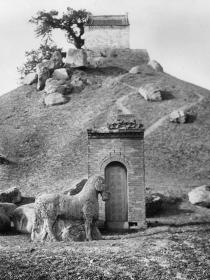
In 1914 Victor Segalen discovered in China a carved group, that he dated to before Christ, representing a “barbarian” downed by a mighty horse, the figure of Huo Qubing, a young cavalry general.
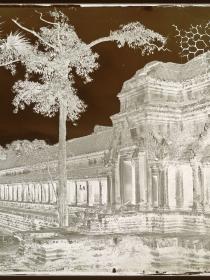
The countless photographs of Angkor Vat taken by tourists thronging each year to admire the vestiges of the Khmer architecture in the province of Siem Reap in Cambodia have not reduced the majesty of this temple dedicated to Vishnu and built in the early 12th century at the request of the king Suryavarman II. We can easily imagine the thrill of the first European visitor, arriving in the mid-19th century in the context of the French and British imperial aspirations, among whom the Alsatian photographer Émile Gsell (1839-1879).
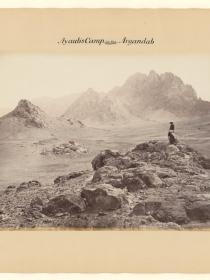
Rock and sand as far as you can see, the huge mass of the distant mountains, the silence of this desert landscape compose in this photograph a striking and sublime image of the topography of the Arghandab, the central valley of Kandahar in southern Afghanistan.
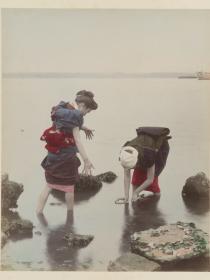
Held in the very rich collection of antique photographs of Japan preserved at the Musée Guimet, this photo proof by Tamamura Kōzaburō is a fine example of the style of the Yokahoma school, also known as “Yokohama Shashin” (Yokohama photography).
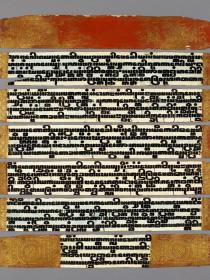
In the Buddhist tradition, copying the holy texts is a praiseworthy deed; so nothing can be too beautiful to bear Buddha’s word. In Burma all the boys must enter the monastery, even if only symbolically. The child is arrayed like a prince, recalling Buddha’s princely status.
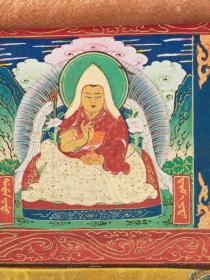
Changkya khutukhtu is the title of the spiritual chief of the Gelugpa school of Tibetan Buddhism in Mongolia under the Qing Dynasty. The book presents the works by Nag-dban-blo-bzan-chos-ldan, one of the first Changkya khutukhtu (1642-1714).
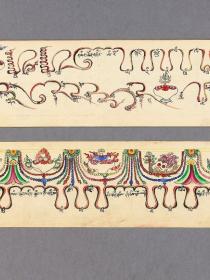
Under the Qing Dynasty (1644-1912) Tibetan-tradition Buddhism spread from Mongolia to Eastern Siberia, mainly to Bouriatie, Kalmoukie, and Touva, where this manuscript comes from, more precisely from Ter Hool, to the west of the capital Kyzyl.
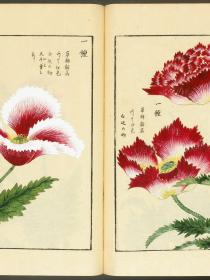
The Honzo zufu (Illustrated book of medicinal herbs) is a botany work owed to Iwasaki Tsunemasa (1786-1842), a Japanese botanist, zoologist, and entomologist, as well as a Samourai.
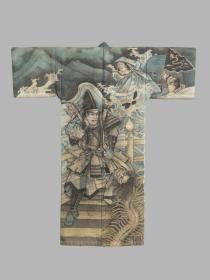
Firemen played a vital role in Edo Period cities regularly devastated by fires. The rudimentary material conditions of their interventions led them to be perceived as authentic heroes ready to sacrifice themselves for the community.
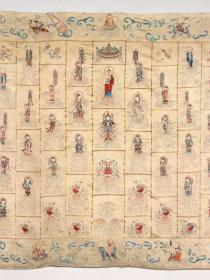
In our day the 17th-, 18th-, and 19th-century liturgical robes (kesa) of Chinese Buddhist monks are far more rare than their Japanese matches. Only the most prestigious pieces, belonging to the more formal category of the sogyari (kesa with nine to twenty-five strips), have come down to us.