_en_search_text
_en_search_text

A K-ompletely Korea year!
With three exceptional exhibitions, a monumental installation on the facade and a rich program of events in the auditorium, the Guimet invites the public to discover the many faces of a culture that has spread throughout the world, in a perpetual dialogue between centuries-old traditions and innovations that open new futures.
Now recognized as a major cultural powerhouse, South Korea influences the collective imagination and shapes global trends. At the heart of this influence, K-beauty is not limited to the cosmetics industry: it embodies a holistic vision of beauty, deeply rooted in Korean history and culture. Through its practices, imagery, and rituals, it tells the story of the enduring nature and transformations of an aesthetic ideal, from the late 18th century to today’s globalized world.
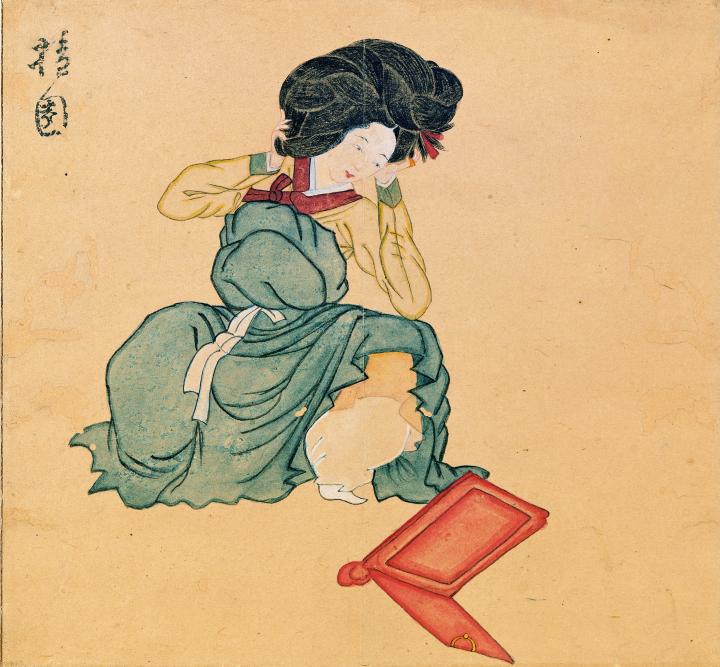
Attributed to Kim Hong-do (1745–1814?), Woman Combing Her Hair, Joseon Dynasty (1392–1910), second half of the 18th century, Seoul, National University of Arts Museum
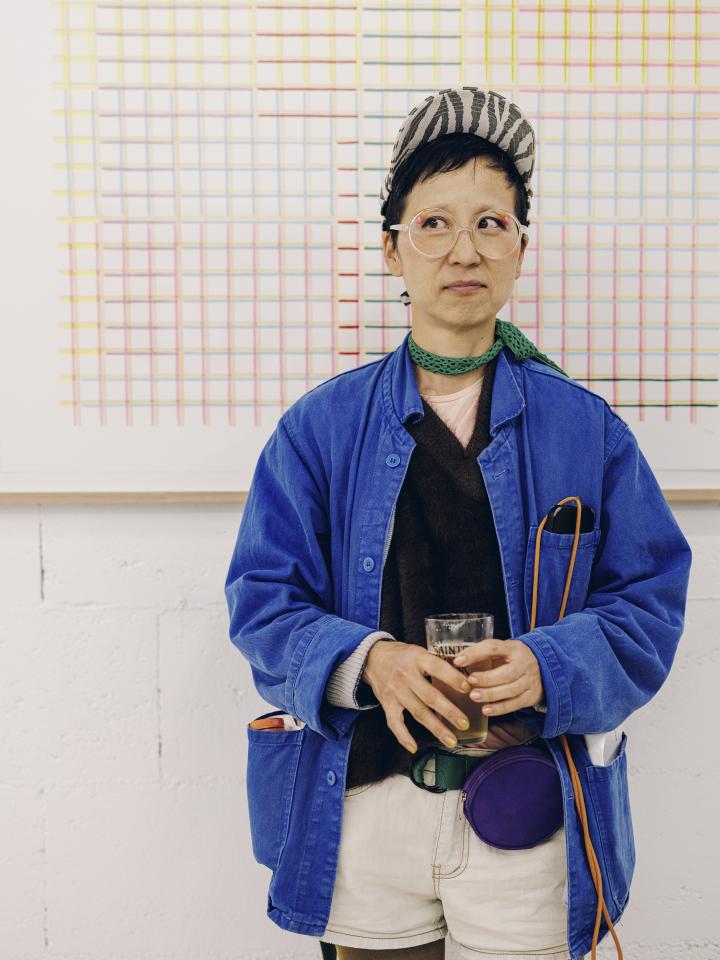
At the invitation of the Guimet Museum, artist Seulgi Lee has created a temporary installation for the building on Place d’Iéna. Titled DAL DARI, The Moon and the Legs, this installation is displayed both outside, featuring a monumental sculpture on the façade created in collaboration with architect Jean-Benoît Vétillard, and inside the building, in the rotunda on the fourth floor.
Thanks to an exceptional collaboration with the Gyeongju National Museum and other South Korean and French museums, Guimet is presenting, for the first time in Europe, an exhibition on the Silla Kingdom (57 BCE–935 CE), one of East Asia’s most brilliant civilizations.
Unveiled through archaeology as well as medieval chronicles, Silla art is now recognized as a living legacy at the heart of South Korea’s cultural memory. This unprecedented exhibition highlights a kingdom where, for nearly a millennium, art, spirituality, and power converged to shape a culture of remarkable richness.
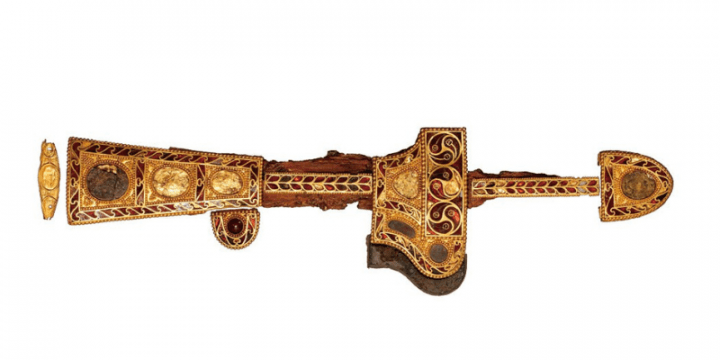
Dagger with a gilded handle and scabbard © Photos: Gyeongju National Museum, South Korea
Whether royal, academic, or museum-based, the library remains a treasure trove of knowledge and escape. In late 18th-century Korea, King Jeongjo (1776–1800) made this space a pictorial motif in its own right. To remain symbolically surrounded by his books, he commissioned painters from the Royal Academy to create trompe-l’œil depictions of libraries, installed in his study or behind his throne. These paintings, known as chaekgeori, reflect the influence of Chinese treasure chambers, as well as the art of perspective introduced by the Jesuits at the Qing court. From this encounter emerged a unique visual language, blending Asian scholarship with Western illusion. For the first time at the Guimet Museum, the exhibition restores the chaekgeori to its full artistic and intellectual significance, beyond its purely decorative dimension.
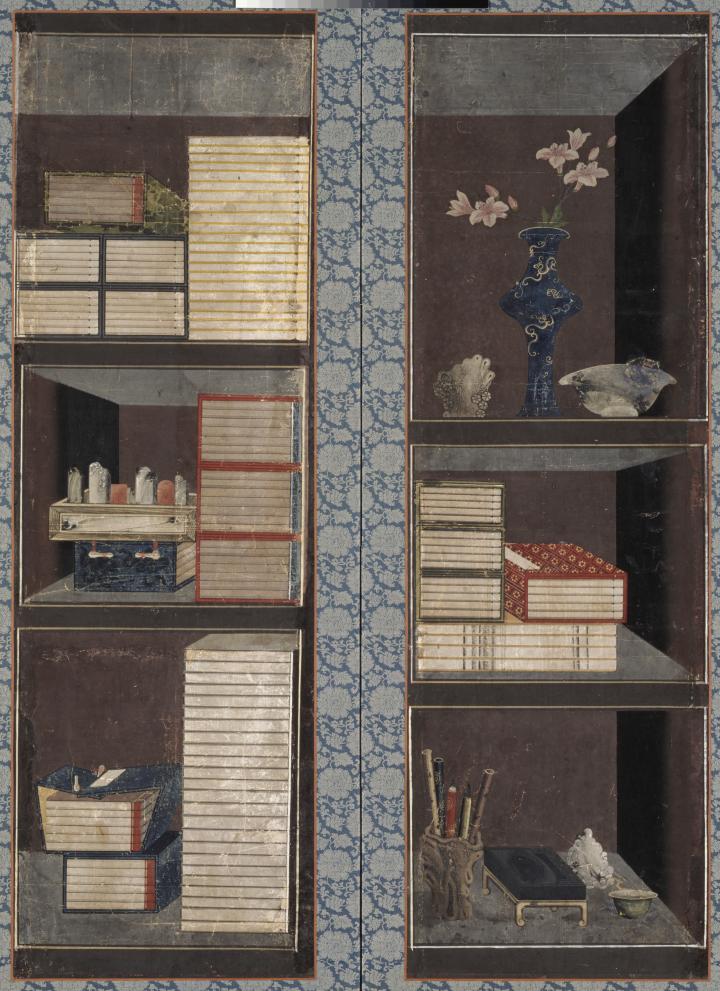
Six-panel screen (detail), Yi or Choson dynasty (1392–1910), Former Lee U Fan collection, Paris, Guimet – National Museum of Asian Arts © Musée Guimet Paris, Dist. GrandPalaisRmn / Thierry Ollivier