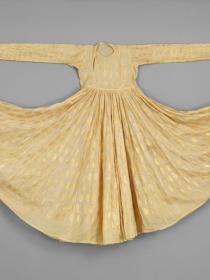
Under the reign of the Mughal emperor Akbar (1556-1605), Babur’s grandson, the Turko-Mongol-style costumes worn during the reigns of Babur and his son Humayun, unsuited for India’s climate, began to resemble traditional Indian garments.
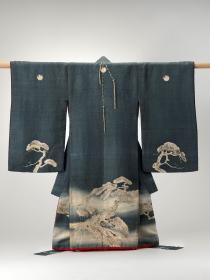
Ceremonial kimono with a decor of cranes and pines under the snow
In the Edo period the kimonos that children wore since birth and up to the age of three were called hitotsumi. This kimono is a boy’s garment from the late 19th century.
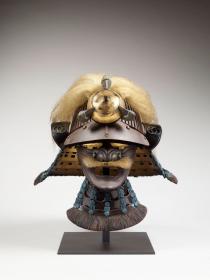
This remarkably well-preserved helmet has kept its rear-peak, its throat piece, and is above all associated with its half-mask (mempo). On each of its wings It bears the Wakizaka family coat of arms.
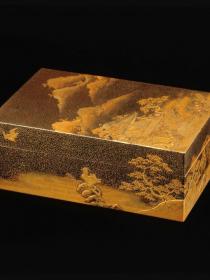
Decorated in a style combining the gorgeousness of the gold with the delicacy of the draughtsmanship, this writing-box illustrates the eminently pictorial aspect of lacquerwork in the early 18th century.
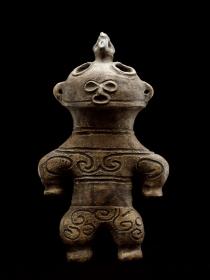
The large horizontal “goggle eyes” of this statuette led it to be called “dogu with snow goggles”, their shape recalling the protections the Inuit population used against the reverberation of the sun on the snow. For others, they are closed eyelids involving these figures in the world of the dead.
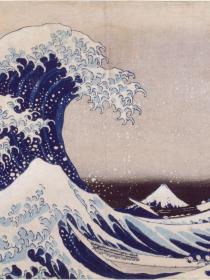
There are certain artworks which at some time in their lives are no longer seen as such, becoming icons. Similarly to Mona Lisa, that is no longer an Italian Renaissance portrait – or is far more that that -, Hokusai’s Wave goes beyond just the history of Japanese prints.
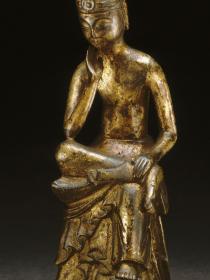
A masterpiece of Paekche statuary in the days of the Three Kingdoms (1st-7th centuries), this late 6th-century gilt bronze bodhisattva tells us that Korea, while being receptive to influences from the continent, developed its own style.
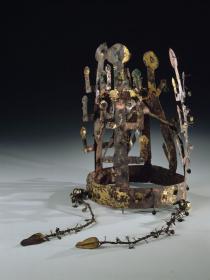
This piece remains one of the most characteristic testimonies of the treasures of goldsmith’s art brought to light in this Silla kingdom (57 BC-668 AD).