The musée Guimet is a partner of "Fontainebleau invites Korea"
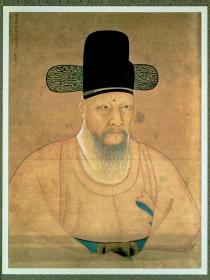
From 5 June to 23 September, the musée Guimet and the château de Fontainebleau partner to showcase diplomatic relations between France and South Korea.
The musée Guimet lends some of its treasures for the exhbition "Silk Roads, what remains and what is imagined" in Draguignan
The summer exhibition at Hôtel départemental des expositions in Draguignan presents objects, photographies and archeological vestiges, including exceptional loans from the museum.
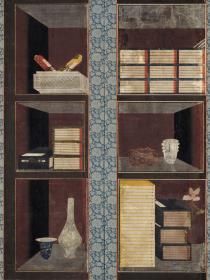
In Korea the still life is a pictorial movement that flourished in the 17th and 18th centuries AD. Books appear next to various objects associated with writing, harmoniously combined with natural elements drawn from the animal and vegetal world.
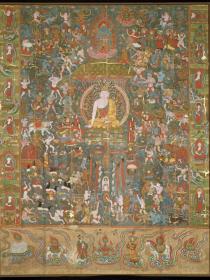
One of the most emblematic scenes in the life of Buddha Shakyamuni is probably the one just before his Awakening, where the supreme deity of the world of desires, Mara, attempts to deter and then vanquish him.
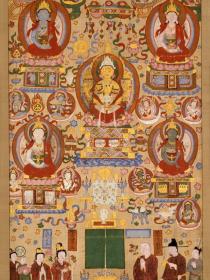
Brought back by Paul Pelliot from the famous Chinese site of Dunhuang located at the start of the Silk Road, this painting represents a Buddhist mandala, or mystical diagramme. As often the case with esoteric works, this one requires being patiently deciphered.
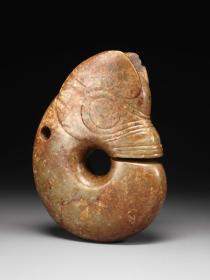
Literally meaning “pig-dragon”, the zhulong is a magical creature formed by a serpentine body wrapped around an orifice, and ending with a pig’s head topped by two raised ears, a pair of round eyes, and a flat wrinkled snout.
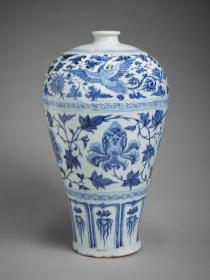
This exceptional Chinese vase with its blue and white décor, dated to the mid-14th century, is a work crafted in China under the Yuan Dynasty (1279-1368), and long held in a French family.
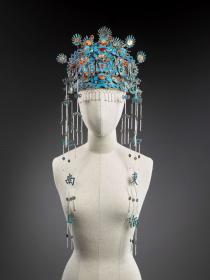
The wedding headdress known as the “phoenix tiara” was donned by the women of the Han ethnic group on the occasion of their wedding, as well as for the most formal occasions –, thus we often find them represented in portraits of ancestors.