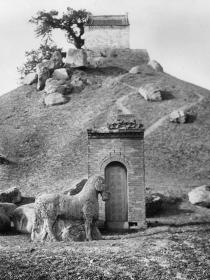
In 1914 Victor Segalen discovered in China a carved group, that he dated to before Christ, representing a “barbarian” downed by a mighty horse, the figure of Huo Qubing, a young cavalry general.
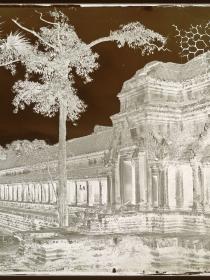
The countless photographs of Angkor Vat taken by tourists thronging each year to admire the vestiges of the Khmer architecture in the province of Siem Reap in Cambodia have not reduced the majesty of this temple dedicated to Vishnu and built in the early 12th century at the request of the king Suryavarman II. We can easily imagine the thrill of the first European visitor, arriving in the mid-19th century in the context of the French and British imperial aspirations, among whom the Alsatian photographer Émile Gsell (1839-1879).
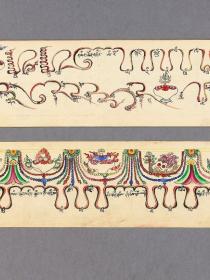
Under the Qing Dynasty (1644-1912) Tibetan-tradition Buddhism spread from Mongolia to Eastern Siberia, mainly to Bouriatie, Kalmoukie, and Touva, where this manuscript comes from, more precisely from Ter Hool, to the west of the capital Kyzyl.
The musée Guimet is a partner of "Fontainebleau invites Korea"
From 5 June to 23 September, the musée Guimet and the château de Fontainebleau partner to showcase diplomatic relations between France and South Korea.
The musée Guimet lends some of its treasures for the exhbition "Silk Roads, what remains and what is imagined" in Draguignan
The summer exhibition at Hôtel départemental des expositions in Draguignan presents objects, photographies and archeological vestiges, including exceptional loans from the museum.
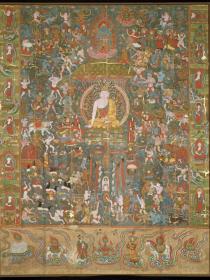
One of the most emblematic scenes in the life of Buddha Shakyamuni is probably the one just before his Awakening, where the supreme deity of the world of desires, Mara, attempts to deter and then vanquish him.
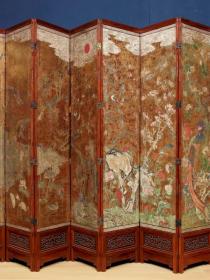
This exceptional screen presents the particularity of being mounted on a frame of precious wood; at the bottom of each of its panels is carved a mythical beast, standing out against a background of lacy clouds.
The Friends of the Musée Guimet bring together art lovers, enthusiasts and professionals of Asian arts who ensure the influence of the institution in France and all over the world, inspire donations and bequests, thereby contributing to the collections’ enrichment.